Vivega Health Newsletter · September 2026 · Healthcare AI & Value-Based Care
Everyone got better, with the bar getting higher in healthcare quality.
This edition, due to timing, covers the two quality ratings that landed within days of each other, and how the bar moved for Medicare Advantage, commercial, and Medicaid plans in U.S. healthcare alike. I ran multiple lines of business inside health plans before building Vivega Health, which now works with healthcare organizations in the U.S. and internationally. The pattern below travels further than the acronyms do.
Three things landed this month. CMS Plan Preview 2 wrapped, with the 2027 Star Ratings due in the second week of October. NCQA’s 2026 Health Plan Ratings published September 16, and the trade coverage that followed showed something the headline hid. And the industry started doing the arithmetic on what the October posting is actually worth. They were covered as separate stories. They are one story, and here is how I read it.
| Item | Value |
|---|---|
| What plans gainedNCQA 2026, MA | +7.3 pts |
| What the cut point didStars 2027, no guardrail | +9 to +12 pts |
What is the difference between CMS Star Ratings and NCQA Health Plan Ratings?
CMS Star Ratings grade Medicare Advantage and Part D contracts and set the Quality Bonus Payment. NCQA Health Plan Ratings grade commercial, Medicare and Medicaid plans for consumers, employers and states, with no federal payment attached. Both grade plans relative to the field.
Worth thirty seconds, because the two ratings are built for different jobs and people conflate them constantly.
| CMS Star Ratings | NCQA Health Plan Ratings | |
|---|---|---|
| Rates | Medicare Advantage and Part D contracts. Not commercial. Not Medicaid. | Commercial, Medicare and Medicaid plans, nearly 1,000 of them. |
| On | ~40 measures: HEDIS clinical quality, CAHPS experience, HOS member-reported outcomes, admin and access operations, Part D medication. | HEDIS and CAHPS plus accreditation bonus points, with CMS’s Health Outcomes Survey feeding the clinical set for Medicare plans and NCQA’s own review of plan structure and quality-improvement processes. |
| Data year | Performance data on the standard Stars reporting cycle. | Primarily 2025 performance, with select MA measures reflecting 2024 results because of federal reporting schedules. |
| For | Beneficiaries shopping on Plan Finder, and CMS. Four stars and up earns the Quality Bonus Payment and a better rebate percentage. | Consumers, employers and state purchasers choosing and evaluating plans. |
| Scored | On a curve. Cut points follow the field, not a fixed standard. | Against percentiles, so also relative to the field. |
| In short | A consumer signal and a revenue mechanism in the same number. | No federal payment attaches to it. |
One rating pays you, the other positions you. Both grade relative to the field, which is exactly why reading them together tells you more than either does alone.
How much did 2027 Star Ratings cut points change?
About half rose: 49% up, 33% flat and 18% down versus Stars 2026. HEDIS cut points rose most (79% of them); CAHPS barely moved (11%). Reward factor thresholds fell at both the 65th and 85th percentiles, a sign that contract-level ratings declined across the market.
The 2027 rating is set. Roughly half of all cut points rose against Stars 2026, 49% up, 33% flat, 18% down. Measure-level ratings improved for 44% of contracts and declined for 26%. But the real finding is where the bar moved.
| Item | Value |
|---|---|
| HEDISclinical gap closure | 79% |
| Operationsadmin & access | 56% |
| HOSoutcomes survey | 55% |
| Part Dmedication | 50% |
| CAHPSmember experience | 11% |
NCQA reported the same pattern nine days later: 18 plans at five stars (up from 11); follow-up after hospitalization for mental illness +11.9 points in MA, +9.0 in Medicaid and +8.9 in commercial; 22 of 28 chronic-disease indicators improved.
The bar climbed hardest where the work is engineerable. HEDIS gap closure is industrial infrastructure now, vendors, registries, outreach engines, so the whole field raced ahead, and the threshold moved with it. CAHPS barely budged, because member experience resists that kind of engineering, and CAHPS still carries 21% of the overall rating weight, close to HEDIS at 23%.
I take two things from that. First, gap closure has to run faster just to hold the Star you already have. Second, the harder-to-build capability, access, coordination, communication, trust, is the one that is actually defensible, precisely because nobody can buy it in a quarter.
Wakely's actuaries read the technical notes and found what the cut-point counts miss. The reward factor thresholds fell at both the 65th and 85th percentiles (3.649 to 3.545, and 3.932 to 3.872). Those thresholds track contract-level ratings, so the drop means ratings declined across the market even as measure rates improved. Cut points rose faster than performance. At the four-star level alone, 42% of cut points got harder, down from 63% last year, but for HEDIS it was still 67%.
No-guardrail measures can leap. Kidney Health Evaluation moved 9–12 points; Colorectal Cancer Screening moved 4–11 on the ECDS conversion. The 5% guardrails do not apply to KED in its second year or to COL after its substantive change. If one of your rates sits within a point or two of a threshold, that is your live exposure, not your averages.
Over a million enrollees are affected by plan exits in 2027. Some of the rising bar is a thinning, curve-graded field, not better care. I would price that in before crediting my own programs.
The low end is still climbing. CMS's Tukey outlier logic is still working through the 2- and 3-star cut points, capped each year by guardrails. Almost all administrative 2- and 3-star cuts rose, many by the maximum allowed. For contracts near the bottom, the floor keeps rising regardless of how the field performs.
What did NCQA's 2026 Health Plan Ratings show by payer?
Five-star plans rose from 11 to 18, but fewer plans sat at 4.5 and 4 stars. Aetna's four-star plans fell from 63 to 23 and UnitedHealthcare's from 68 to 53, while Elevance rose from 3 to 8 and every Kaiser Permanente plan rated four stars or higher.
The headline was straightforward enough: eighteen plans hit five stars, up from eleven last year. Benchmark performance rose 1.6 to 1.8 points across every product line. Follow-up after hospitalization for mental illness rose 11.9 points in Medicare Advantage, 9.0 in Medicaid and 8.9 in commercial, the single biggest gain in the release. Twenty-two of twenty-eight chronic-disease indicators improved.
Then the trade coverage landed, and the shape underneath was less flattering. The top of the table got more crowded while the tiers just below it thinned. More plans reached five stars, and fewer sat at 4.5 (35, down from 55) and at four (227, down from 254) than the year before. Plenty of plans scored lower in 2026 than in 2025.
| Item | Value |
|---|---|
| UnitedHealthcare172 plans scored → 137 | 2025: 68 |
| 2026: 53 | |
| Aetna (CVS Health)136 scored → 135 | 2025: 63 |
| 2026: 23 | |
| Cigna11 plans at 2.5 stars or lower | 2025: 5 |
| 2026: 2 | |
| Elevance Healthmoved the other way | 2025: 3 |
| 2026: 8 |
2025 2026
Payer by payer, it stops being an abstraction:
| Payer | What moved |
|---|---|
| Kaiser Permanente | Thirteen plans rated, every one of them at four stars or higher. Added five-star Medicaid HMOs in northern and southern California, and held five stars for its commercial and Medicare HMOs in the same region. |
| UnitedHealthcare | 137 plans scored, down from 172 after cutting back more than 100 MA plans for 2026. Four-star plans fell from 68 to 53; 3.5-star from 75 to 54. Three plans at 4.5, up from one. |
| Aetna (CVS Health) | About the same volume scored, 135 versus 136, but a sharp downgrade into the middle. Four-star plans fell from 63 to 23; 3.5-star rose from 44 to 85. One plan at 4.5. |
| Cigna | Four-star plans dropped from five to two. 3.5-star rose to 15. Eleven plans now sit at 2.5 stars or lower. |
| Elevance Health | Moved the other way, two plans at 4.5, up from one, and eight at four, up from three. |
| Humana / Molina | Small gains at the top. Humana now has three four-star plans of 40 rated; Molina two, up from one. |
| UPMC | Two commercial plans at five stars, down from three. |
Also at five stars: a commercial PPO from Blue Cross Blue Shield of Massachusetts, a Medicare HMO from Hometown Health in Nevada, and a Medicare PPO from Network Health Insurance Corp in Wisconsin.
Two things worth sitting with. Medicaid holds the highest share of top-rated offerings, 2.5% of Medicaid plans at five stars and 6.94% at 4.5, ahead of both commercial and Medicare. That is not where most strategy decks assume excellence lives. And the five-star tier is entirely nonprofit, with Kaiser holding half of it. I will come back to that in the future.
Why can a health plan improve and still lose Stars?
Because both ratings grade on a curve. On Kidney Health Evaluation, MA plans improved 7.3 points, but the CMS cut point rose 9 to 12 points, leaving a plan that improved at the national average 1.7 to 4.7 points further from the threshold.
Take one measure across both releases.
NCQA: MA plans improved Kidney Health Evaluation by 7.3 points.
CMS: the KED cut point moved 9 to 12 points.
That is not an isolated case. NCQA found 22 of 28 chronic indicators improving; CMS found 79% of HEDIS cut points rising. Those are not two findings, they are one finding, reported from opposite ends by the two bodies that grade on a curve.
Measurement is moving in lockstep too. NCQA converted three measures to ECDS this cycle and retired twelve; the Stars colorectal ECDS conversion moved that cut 4 to 11 points. Digital measurement is not an upgrade path anymore. It is the floor.
What does the October 2027 Star Ratings release affect?
One number does three jobs on three timetables: it sets the 2028 Quality Bonus Payment, it becomes a public rating on Medicare Plan Finder when AEP opens October 15, and it caps what the June 2027 bid can fund.
Once CMS publishes the 2027 Star Ratings, one number starts doing three separate jobs on three different timetables: it sets the quality bonus payment for 2028, it becomes a public competitive fact on Plan Finder the moment it posts with AEP opening October 15, and it caps what the June 2027 bid can fund. Two of those three sit outside the quality team entirely, which is why the plans that handle October well had the conversation in September, with growth and actuarial in the room.
The economics are why that four-star boundary matters more than it used to. Federal quality bonus spending reached $13.4 billion in 2026, up from $12.7 billion, while the share of MA enrollees in bonus-eligible plans fell to 68% from 75%, the lowest since 2018, and contracts at four stars or higher dropped from 261 to 209. Wakely draws the same conclusion from the actuarial side: lower ratings across the market point to reduced 2028 QBP revenue at the moment holding performance takes more investment, not less.
A posted rating is not always the last word
This past year made that point more firmly than any before it. The Clover ruling in May 2026 sent CMS back to recalculate; the agency then revised 2026 ratings for other contracts on its own; Elevance, SCAN and Alignment brought suits seeking similar treatment; CMS has appealed. The methodology questions the courts raised are still open.
I went into this in depth with Mark Newsom, former CMS deputy group director, on a recent episode of The Healthcare STARcast, the conversation on Star Rating turbulence and what the litigation actually changes for plans. Worth a listen if any of your contracts sit near a boundary.
None of that argues for treating the October number as provisional. It does argue for reading your own rating with the measure-level detail in hand rather than the headline alone. The plans that knew exactly which measures drove their score were the ones positioned to move quickly when the methodology came under review, and that detail is just as useful in the ordinary case where nothing gets revisited at all.
What should health plans do before December 31?
Find every measure within two points of a cut and test whether it is reachable at your current run rate. Give risk adjustment its own calendar and owner, fix clinical data supply for ECDS, plan against the measures that will still exist in 2028 and 2029, and build capacity in the people doing the work.
Plan Preview 2 has wrapped, and the CMS reconciliation window with it. The public release lands in the second week of October, and AEP runs October 15 to December 7. So the question is no longer what 2027 will say, that is settled. It is what an organization does next.
Four moves, one per pillar of the framework.
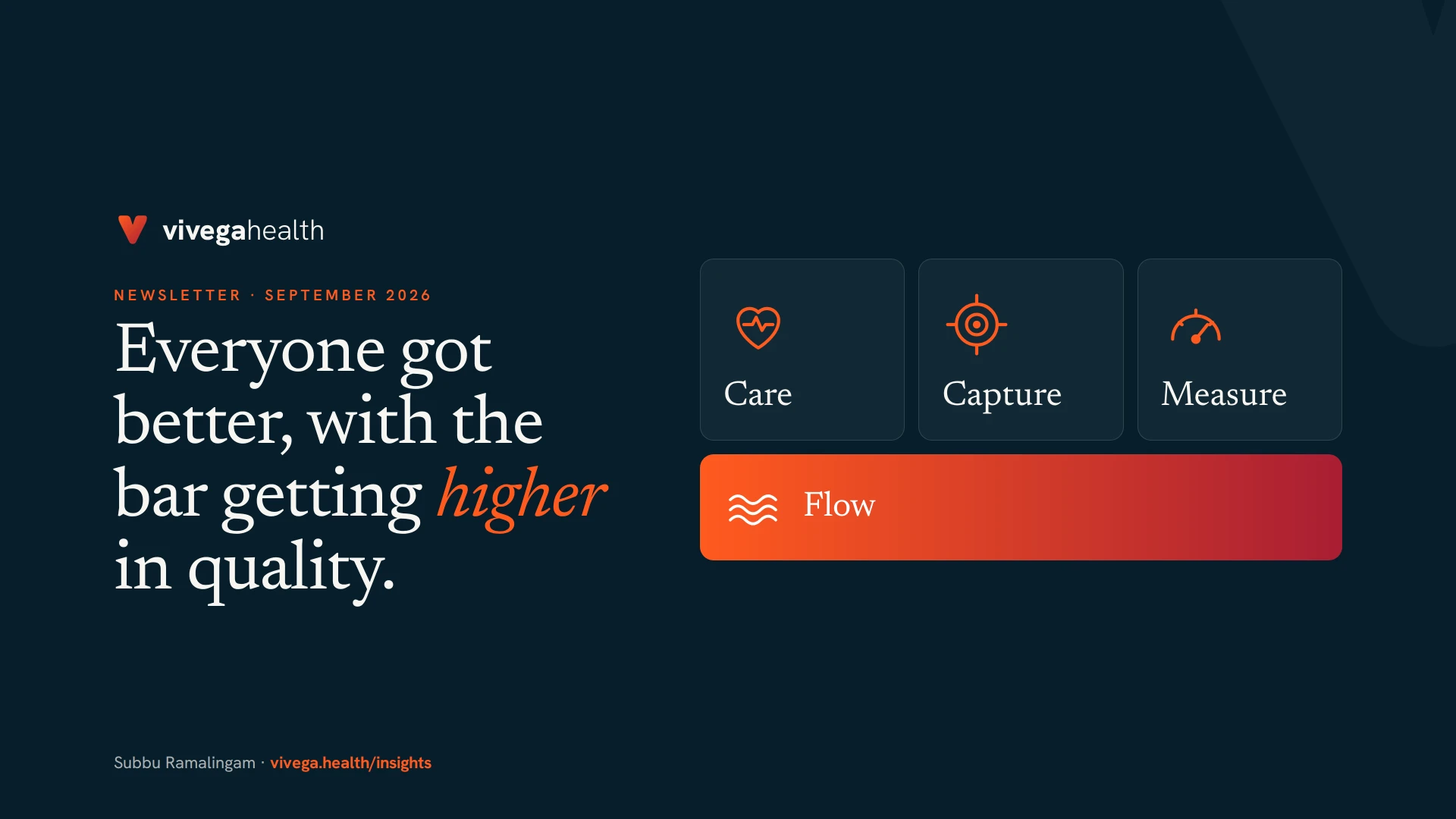
Care, improvement is table stakes. Position is the score.
KED rose 7.3 points nationally, and the threshold rose from 9 to 12. Roughly 80% of chronic indicators improved. Moving your rate up no longer guarantees moving your rating up, and with the bonus pool concentrating into fewer contracts, the four-star boundary is worth more than it was.
The move: find every measure sitting within two points of a cut, weight it, and test whether it is reachable at your current run rate before December 31. Plan against the measure set that will exist. The CY2027 final rule removes Call Center – Foreign Language Interpreter and TTY Availability (Parts C and D) and Statin Therapy for Patients with Cardiovascular Disease starting with the 2028 Star Ratings, and nine more, including appeals, complaints, Members Choosing to Leave, Customer Service and Rating of Health Care Quality, starting in 2029. Fund the near-cut measures that stay, alongside the measures new to Stars in 2027, Care for Older Adults–Functional Status Assessment, Concurrent Use of Opioids and Benzodiazepines, and Polypharmacy: Anticholinergic Medications, and the ones coming next, including Depression Screening & Follow-up (DSF).
Capture: While risk adjustment runs on its own clock, the calendars in managed care are increasingly getting complex
Diagnosis capture has its own submission deadlines, its own audit exposure, and its own CY2027 change: unlinked chart reviews stop counting for MA. Operational calendars are getting increasingly complex with multiple audit cycles (MA RADV & HHS-RADV).
The move: give each team and risk adjustment its own deadline map, its own owner, and its own monthly read. If you are a leader handling multiple complex timelines, contextualize without distracting. As a leader, it is important to understand the moving parts and articulate and contextualize them for teams. Most importantly, do not conflate; be clear on what matters when.
Measure, digital measurement is the floor, not the upgrade.
NCQA revised three measures to ECDS and retired twelve this cycle, and plans to phase hybrid reporting out entirely by MY2029. What you can prove from structured data is becoming the whole of what counts.
The move: read your readiness against the published schedule below, then fix the data supply rather than the chart-chase capacity. The schedule is not a forecast; it is already written.
Flow, compression rewards capability, not tactics.
Variation between high and low performers narrowed in every product line, and CAHPS cut points barely moved. The five-star tier is entirely nonprofit, half of it one integrated system. That is operating capability, not a clever measure play.
The move: build capability in your people. The teams carrying Stars, risk adjustment and digital measurement at once are juggling more than any single calendar shows, and so are the executives accountable for them. Flow, the state where hard, focused work gets done well, does not happen on a calendar with no white space. Create capacity before you ask for more output: protect focus time, cut the meetings that do not move a measure, and finish one priority before adding the next.
Do not fear failure. Fear inaction. A team that tests an intervention in November and learns it missed is further ahead than one still waiting for certainty in March. Make it safe to try, report back and adjust.
Take care of your people. Give them room, and grow them personally and professionally toward the mission. The organizations that hold four and five stars year after year are the ones where good people stay and get better. That is the capability nobody can buy in a quarter.
When does NCQA retire HEDIS hybrid measures?
NCQA's published schedule phases hybrid reporting out by MY2029. Controlling High Blood Pressure and Blood Pressure Control for Patients with Diabetes move to ECDS in MY2028.
This is the part of Measure that organizations keep treating as a future problem. It is not. NCQA has published the retirement schedule for hybrid reporting, and every date on it lands inside a budget cycle someone is writing right now.
| Measurement year | Measure | Changes to |
|---|---|---|
| MY2026 | Lead Screening in Children | Administrative only |
| MY2027 | Weight Assessment & Counseling for Children and Adolescents | Administrative only |
| MY2028 | Prenatal & Postpartum Care | Administrative only |
| Controlling High Blood Pressure | ECDS | |
| Blood Pressure Control for Patients with Diabetes | ECDS | |
| MY2029 | Glycemic Status Assessment for Patients with Diabetes | ECDS |
| Transitions of Care | ECDS | |
| Care for Older Adults | ECDS | |
| Hybrid reporting phased out entirely | ||
Source: NCQA, proposed timeline for retiring and replacing HEDIS hybrid measures.
Read that alongside the Stars side and the point lands hard. Controlling High Blood Pressure, whose cut point already drifted 4 to 5 points this year, becomes an ECDS measure in MY2028. If your blood pressure rate today depends on abstractors finding readings in charts, you have two measurement years to replace that capability with a data pipe.
The four questions I would put to any organization now:
Data supply. What share of your members sit behind a live clinical feed, EHR, HIE, lab, registry, rather than claims with a chart chase bolted on the end?
Standards and mapping. Can you trace one member’s rate back to a source record? ECDS counts structured, provable data; it does not count an abstractor’s judgment.
Provider connectivity. Which of your top-20 groups send structured clinical data? Your rate is only as good as the pipe from the practices delivering the care, a contracting and IT problem before it is a quality problem.
The hybrid sunset plan. Chart-abstraction capacity has an expiry date. Where do that budget and those people sit in 2029?
Where do health plans and health systems stand on AI adoption?
75% of U.S. health systems now use at least one AI application, and 97% of payer organizations are piloting or using AI, but fewer than 40% of payers have detailed policies governing staff use of generative AI.
Where do we actually start with AI, and how do we use it well across an enterprise rather than in one clever corner of it?
It is the right question, and it deserves more room than a section at the end of a quality heavy newsletter. Frameworks and a few other things are coming in the next editions. If you have a specific version of that question, send it to me, the ones I am getting asked are shaping what I write.
In the meantime, here is what I have been reading, and the thread I keep pulling on.
Adoption has stopped being the story. Seventy-five percent of US health systems now use at least one AI application, up from 59% a year earlier, with half running three or more, and more than half of those who measured it reporting at least 2x return. Clinical note-taking leads at 68%. On the payer side, 97% of organizations are piloting or actively using AI, but fewer than 40% have detailed policies governing employee use of generative tools, and 60% report staff using unauthorized "shadow AI." Adoption raced ahead of governance, which is the predictable order and the expensive one.
And adoption is not landing evenly. A study of 2,784 Epic hospitals found 62.6% had adopted ambient AI documentation, but 70.2% of nonprofit hospitals versus 28.8% of for-profit, 64.7% metropolitan versus 54.3% non-metropolitan, and steadily higher adoption as operating margin improves. Also worth your time: health plans are increasingly buying AI rather than building it, and HHS has an open request for information on accelerating AI in clinical care covering regulatory frameworks, reimbursement alignment and provider burden, with the AHA’s response a useful read on where provider organizations think the friction actually is.
Until next time,
Subbu
Frequently asked questions
What is the difference between CMS Star Ratings and NCQA Health Plan Ratings?
CMS Star Ratings cover Medicare Advantage and Part D contracts and set the Quality Bonus Payment. NCQA Health Plan Ratings cover commercial, Medicare and Medicaid plans for consumers, employers and state purchasers, and no federal payment is tied to them. Both grade plans relative to the rest of the field.
When are the 2027 Medicare Star Ratings released?
CMS is expected to publish them in the second week of October 2026, just before the Annual Election Period opens on October 15.
How much did 2027 Star Ratings cut points rise?
About 49% of cut points rose, 33% stayed flat and 18% fell. Kidney Health Evaluation rose 9 to 12 points, and Colorectal Cancer Screening rose 4 to 11 points after its move to ECDS.
When will NCQA retire HEDIS hybrid measures?
NCQA has published a schedule to phase out hybrid reporting by MY2029. Controlling High Blood Pressure moves to ECDS in MY2028.
Did Medicare Advantage Star Ratings go down in 2027?
Across the market, yes. Measure-level cut points mostly rose, but the reward factor thresholds, which track contract-level ratings, fell at both the 65th percentile (3.649 to 3.545) and the 85th (3.932 to 3.872). Plans improved, but not fast enough to keep pace with the higher thresholds, which points to lower 2028 Quality Bonus Payments.
Is the Call Center TTY measure in the 2028 Star Ratings?
No. The CY2027 Medicare Advantage and Part D final rule removes Call Center – Foreign Language Interpreter and TTY Availability for both Part C and Part D starting with the 2028 Star Ratings, along with Statin Therapy for Patients with Cardiovascular Disease. Nine more measures, including appeals, complaints, Members Choosing to Leave the Plan, Customer Service and Rating of Health Care Quality, are removed starting with the 2029 Star Ratings.
What changes for risk adjustment in CY2027?
Unlinked chart review records stop counting toward risk scores, so diagnosis capture needs its own deadlines and owner, separate from the Stars calendar.
References
- NCQA, NCQA Releases 2026 Health Plan Ratings
- NCQA, Health Plan Ratings 2026, methodology
- NCQA, Health Plan Report Cards
- RISE, 2027 Star Ratings release: what the October posting sets in motion (Sep 18, 2026)
- Wakely Consulting Group, Cutting It Close: Initial Takeaways from 2027 Star Rating Changes (Winters & Tritt, Sep 2026)
- CMS, CY2027 Medicare Advantage and Part D final rule, Star Ratings measure removals (Federal Register, Apr 6, 2026)
- Health Payer Specialist, UnitedHealthcare, Aetna Lose Dozens of NCQA Ratings; Kaiser Maintains Five-Star Plans (Jiselle Lee, Sep 21, 2026)
- NCQA, Proposed timeline for retiring and replacing HEDIS hybrid measures
- NCQA, HEDIS Electronic Clinical Data Systems (ECDS) reporting
- NCQA, Digital quality transition
- CMS, Part C and D performance data and Star Ratings
- CMS, Medicare Plan Finder
- Fierce Healthcare, Health system AI adoption surges in 2026
- AJMC, Ambient AI tool adoption in US hospitals
- Healthcare AI Readiness Index, most health plans use AI, few govern it
- Innovaccer survey, nearly 80% of health plans prefer vendor-built AI
- HHS, Request for information on AI in health care
- AHA, Response to the HHS RFI on AI in health care

Subbu Ramalingam
Founder, Vivega Health · Managing Director, Quality Stars & Risk Adjustment, ATTAC Consulting Group
Former health plan executive across Medicare, Medicaid and commercial lines of business. Now building at the intersection of healthcare AI and value-based care, and writing about what actually moves outcomes and revenue together.
Everything in one place, vivega.health
The podcast, healthcarestarcast.com
Latest episode, Navigating lawsuits and uncertainty in MA Star Ratings, with Mark Newsom
Sources: NCQA, "NCQA Releases 2026 Health Plan Ratings" and Health Plan Ratings methodology, September 2026. Payer-level movement: Health Payer Specialist, Jiselle Lee, September 21, 2026, on NCQA data. Quality bonus economics and the three-timetable framing: RISE, "2027 Star Ratings release: what the October posting sets in motion," September 18, 2026. Reward factor thresholds, 4-Star cut-point changes, measure weights, guardrail and Tukey effects: Wakely Consulting Group, "Cutting It Close: Initial Takeaways from 2027 Star Rating Changes" (Lisa Winters and Suzanna-Grace Tritt), September 2026. Hybrid-measure retirement schedule via NCQA. AI adoption figures as linked. Analysis, framework (Care · Capture · Measure · Flow) and synthesis: Subbu Ramalingam / Vivega Health.